Dental Procedures Decoded: X-Rays | Dental Worksheet
As a part of your checkup at the dentist, you will likely have to get an x-ray of your mouth. The procedure is painless; the dentist simply uses a small, harmless amount of radiation to create images of your teeth. With this dental worksheet, discover the different types of x-rays your dentist might take of your mouth to prepare for your next checkup.
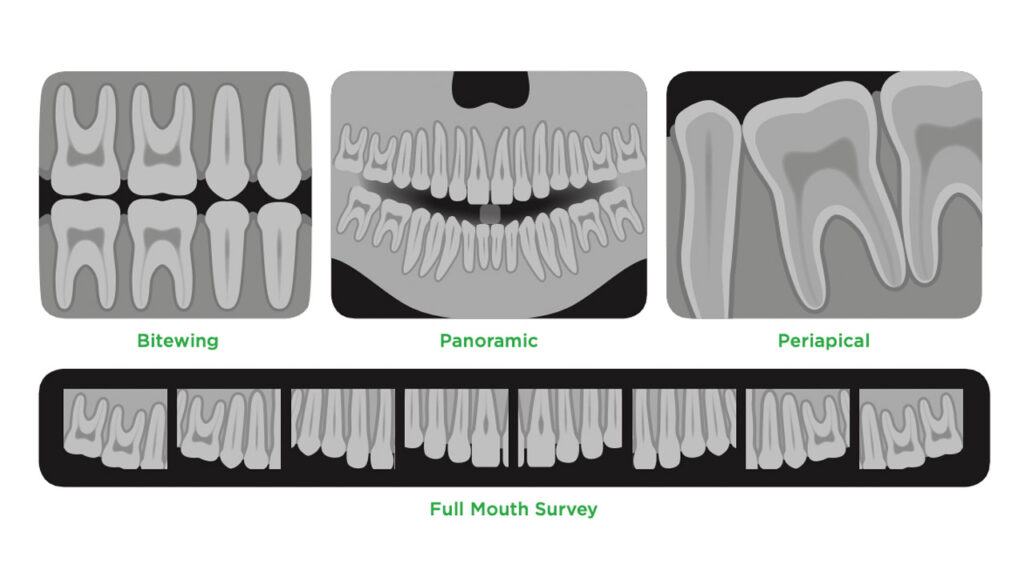
If your dentist needs to see the spaces between your teeth, they take bitewing x-rays of your teeth. This helps to detect cavities or even bone loss between your teeth as a result of gum disease. How often you get these done depends on your cavity or gum disease risk level. They may happen every year or only every few years. For these x-rays, you will wear a heavy, lead apron to protect you from radiation. You’ll bite down on a piece of plastic to keep the film between your teeth as the dentist positions the x-ray machine. With a click of a button, the images are taken and available on their computer. Additionally, periapical x-rays are taken the same way, but they are focused on a whole tooth, roots included.
For a view of the entire mouth, a dentist might take a panoramic x-ray. They use this x-ray to check on the growth and position of your wisdom teeth or even issues with the jaw bone. For this type of x-ray, you will be standing with that same apron over your chest. You bite down on a section of the machine to maintain teeth alignment, and the machine will rotate around your head for about 20 seconds. Then the image will develop, and your dentist will be able to take a look.
Finally, your dentist might take x-rays of your mouth in its entirety with a full mouth survey. While uncommon, it often occurs at your initial screening, when there’s a history of cysts and tumors, after major dental procedures or for wisdom teeth or orthodontic purposes. It combines the previous types of x-rays for a full view of the mouth.
Share this handout with a friend or family member so they can also know about the different x-ray types.