
Carnivores and Herbivores: What’s the Difference? | Dental Worksheet
Humans are able to eat both meat and plants, which makes us omnivores. However, some animals are only capable of eating either plants or meat. Animals that can only eat plants are called herbivores, and animals that only eat meat are called carnivores. Using this dental worksheet, match the appropriate teeth to the animal it might belong to, and learn the difference between the teeth of herbivores and carnivores.
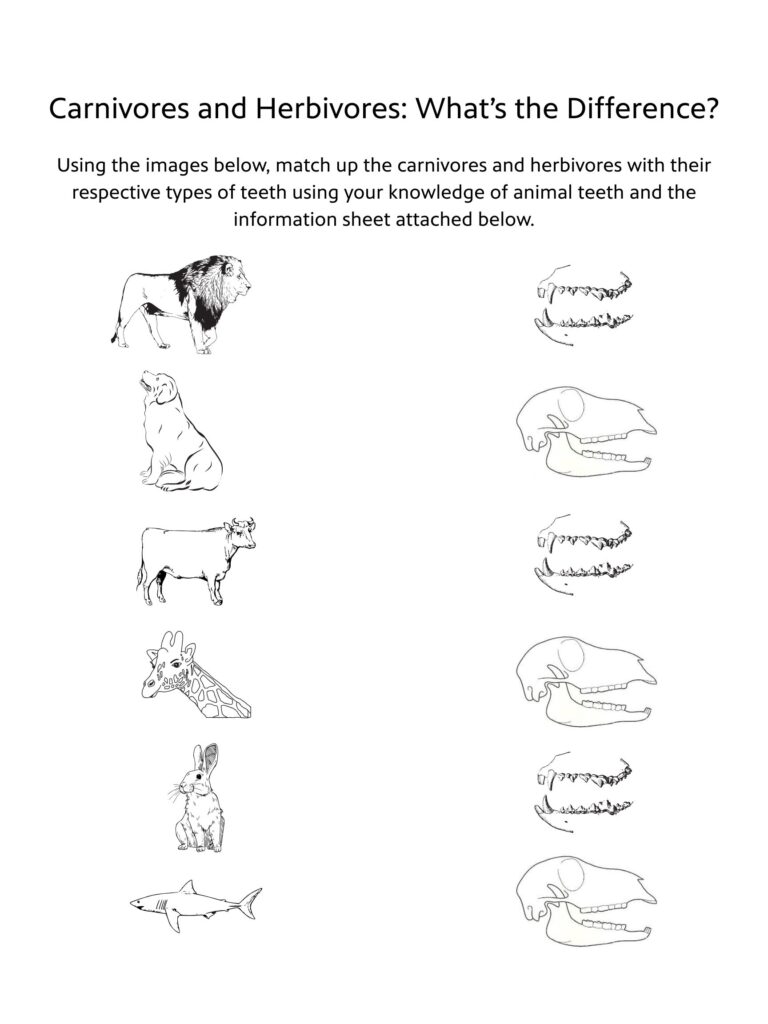
As you’ll discover in this worksheet, carnivore and herbivore teeth have different features that allow animals to eat. Carnivores have sharp, jagged teeth allowing them to tear through the meat of other animals. This is helpful for hunting and breaking down the meat of their prey so it’s easier for them to swallow and digest. They usually have sharp canine teeth and incredibly strong jaw muscles. Examples of carnivores would be wolves, lions and alligators, as they all capture and eat animals as their prey.
On the other hand, herbivores have flat teeth with rough surfaces meant for grinding the plants they eat. Unlike carnivores, herbivores don’t have sharp canine teeth, as they don’t need to hunt for their prey. Many rodents have chisel-like teeth that grow continuously to counter the wear the grinding causes. They can have sharp incisors to tear up plants but might not be present in both the top and bottom of their mouths. Some herbivores, such as horses, are even able to move their jaw sideways! Examples of herbivores would be rabbits, deer and giraffes, as they all eat grass, leaves and hay.
Complete the provided worksheet by reading up on carnivore and herbivore teeth, and match the teeth to the animal. Then, share this dental worksheet with a friend so they can learn about carnivores and herbivores as well.